




How PVC Compounds Are Formulated: Additives Explained
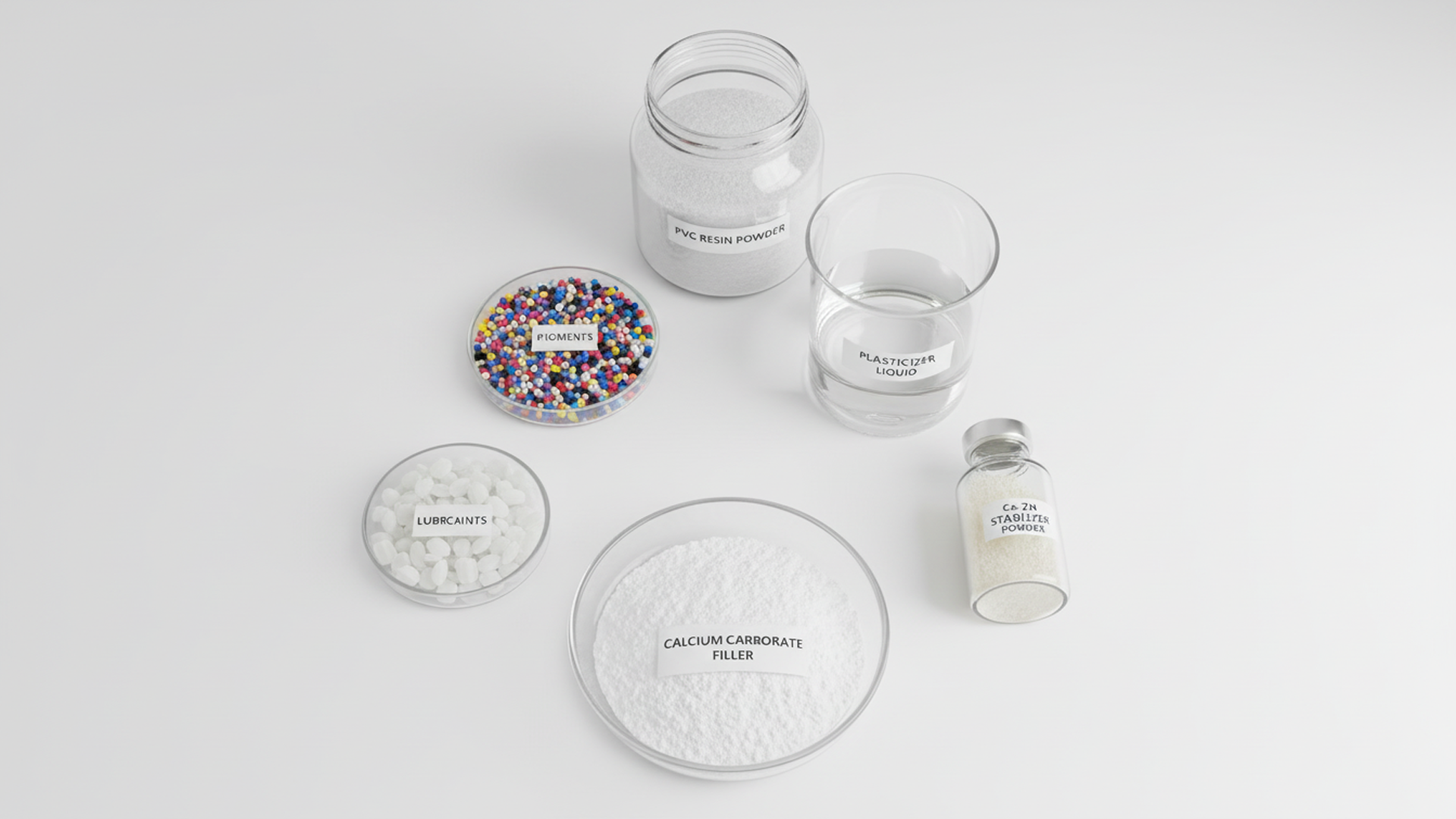
How PVC Compounds Are Formulated: Additives Explained
PVC compounds are engineered blends designed to deliver specific performance characteristics. Proper formulation is essential for processing efficiency, mechanical strength and long-term durability.
1. Core Components of PVC Compounds
1) PVC Resin (K-Value)
K65–67 → flexible applications
K58–60 → transparency
K70–74 → medical & extra-soft PVC
2) Plasticizers
Determine softness, flexibility and processability.
DOTP → general purpose
DINP → cables & hoses
TOTM → high-temperature resistance
Benzoates → fast-fusing applications
3) Stabilizers
Provide heat resistance and color stability during processing.
Ca-Zn → lead-free standard
Tin stabilizers → excellent clarity for transparent applications
4) Fillers (Calcium Carbonate, Talc)
Reduce cost
Improve mechanical strength
Adjust hardness
5) Lubricants
Smoother processing
Better surface finish
Easier mold release
6) Pigments
Color consistency
UV resistance
2. Application-Based Formulation Examples
Cable Compound
DOTP or DINP
Ca-Zn stabilizer
Flame retardant (optional)
Calcium carbonate
Medical Compound
Non-phthalate plasticizers (DINCH / TOTM)
Tin stabilizer
Low filler for clarity
Footwear Compound
DOTP + benzoate blend
High K-value PVC
Fillers + internal/external lubricants
3. Effects of Poor Formulation
High migration
Yellowing
Processing instability
Brittleness
Lower flame resistance
Conclusion
PVC compounding is a precise engineering process. Selecting the right additives ensures optimal performance, cost efficiency and regulatory compliance.