PVC low-temperature flexibility: DOA selection and test conditions
A PVC part that feels flexible at room temperature may behave differently in cold service. Low-temperature flexibility is confirmed by testing the finished product under defined conditions, rather than by selecting a plasticizer alone.
A PVC part that feels flexible at room temperature may behave differently in cold service. Low-temperature flexibility is confirmed by testing the finished product under defined conditions, rather than by selecting a plasticizer alone.
Describe the actual service scenario
Will the part bend, receive impacts or remain stationary in the cold? Distinguish minimum ambient temperature from brief exposure. Hose bending geometry, cable installation and operating conditions, and seal compression behaviour call for different assessments. One temperature figure cannot describe every scenario.
Evaluate DOA within the formulation
Optafleks DOA can be considered in PVC formulations targeting low-temperature flexibility. Final results also depend on resin, other plasticizers, filler and additive levels. Using DOA does not establish a finished product's performance at a specified temperature. Agree the initial formulation and blend proposal with the technical team for the application.
Choose the relevant test
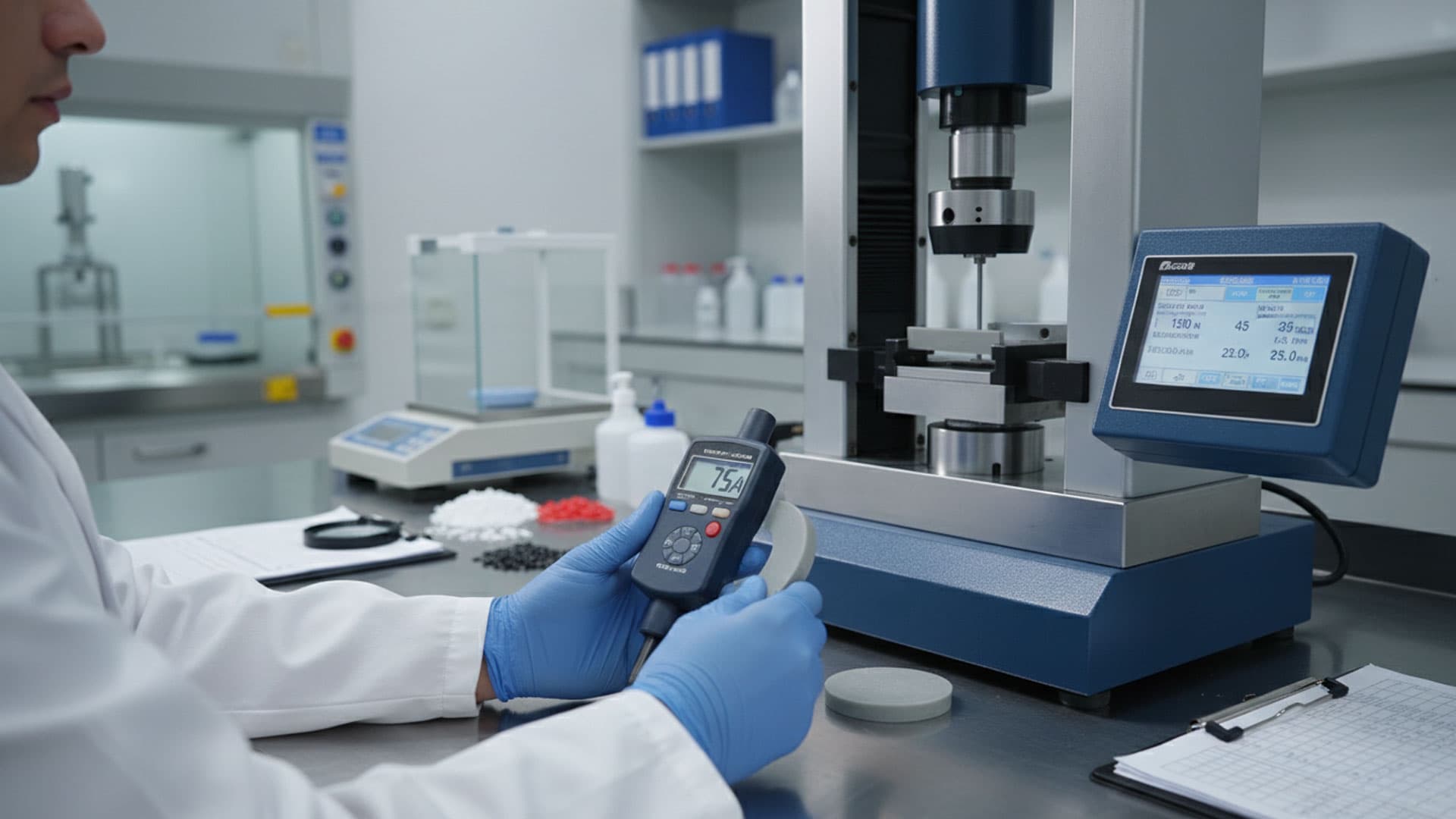
ASTM D746 addresses brittleness temperature of plastics and elastomers under impact. This measurement alone does not establish bending performance for every part geometry or continuous service temperature. Clarify the tests and specimen preparation required by the finished-product specification with the laboratory.
- Record target hardness for reference and candidate formulations.
- Keep thickness, production method and conditioning consistent.
- Define test temperature, dwell time and loading arrangement.
- Compare initial measurements and any required post-ageing results.
- Record cracking, breakage and other failure appearances separately.
Validate beyond initial success
Complete the laboratory assessment with actual parts and production-line specimens. A formulation that performs well in the cold must still meet its other mandatory requirements. Check surface, dimensions, processing and customer-specified mechanical properties together. For a ready-made compound request, share minimum temperature, part geometry and acceptance method rather than relying on the phrase “cold-resistant granules”.
Related products and technical evaluation
Optafleks DOA — DOA low-temperature plasticizer
Evaluate cold flexibility alongside migration and volatility targets when selecting DOA. Use alone or with other plasticizers depends on the formulation. Validate low-temperature performance through cold-bend and mechanical tests on the intended finished article.
Discuss your application with the technical team →Plastay Compounds — Soft and rigid PVC compound / granules
Start compound selection with the application, process and performance target. Assess hardness, flexibility and ageing for soft PVC; dimensional stability, impact and processing for rigid PVC. Portfolio ranges shown here are not guaranteed values for a single grade. Request a grade-specific data sheet and sample.
Discuss your application with the technical team →