Plasticizer selection for PVC plastisol: viscosity and trial planning
Selecting a plasticizer for PVC plastisol requires more than checking finished-part hardness. The mixture's behaviour during preparation, storage and application belongs in the evaluation plan too.
Selecting a plasticizer for PVC plastisol requires more than checking finished-part hardness. The mixture's behaviour during preparation, storage and application belongs in the evaluation plan too.
Define the processing requirement
State operating requirements for coating, dipping or another application. PVC resin grade, filler, pigment and plasticizer composition form the basis of comparison. Success in one formulation is not automatic acceptance for a different resin and filler system. The technical team can use these details to narrow the initial options.
Make viscosity records comparable
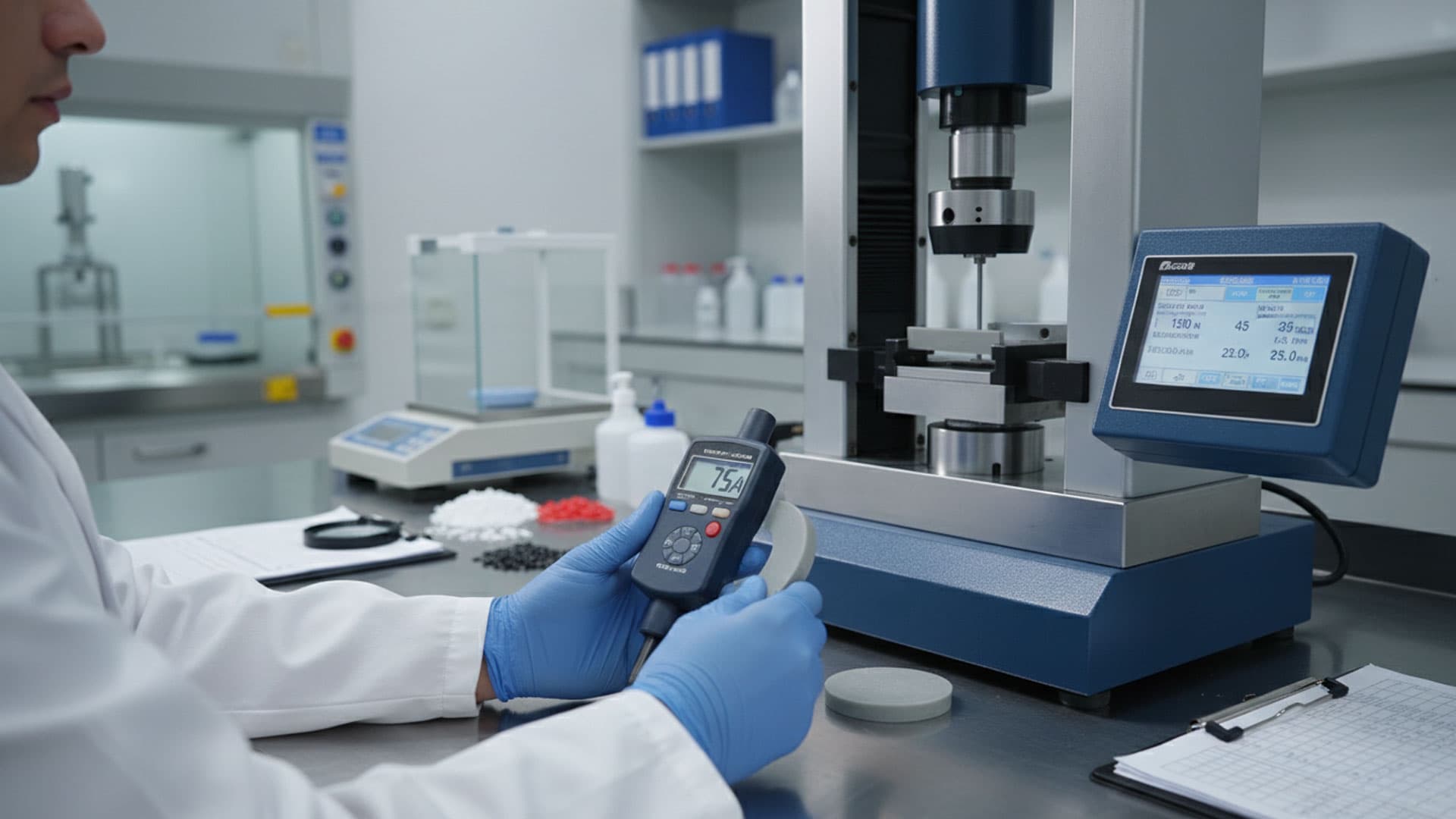
Record mixture temperature, instrument, measurement arrangement, duration and relevant shear conditions. Measure at agreed storage intervals as well as initially. Two results taken at different temperatures or instrument settings do not provide a direct performance ranking of plasticizers.
- The current formulation and a candidate prepared with one changed variable.
- Mixing sequence, duration, temperature and deaeration conditions.
- Initial viscosity and results at defined storage intervals.
- Flow, surface and thickness observations during application.
- Hardness, appearance and required mechanical results after processing.
Assess gelation and final properties together
Do not describe oven or processing settings using the displayed temperature alone; record equipment and part thickness too. Use the same experimental arrangement as the reference formulation. A good-looking first part does not establish consistent results through the thickness or during a prolonged production run.
How should DINP, DOTP and DOP be compared?
Inafleks DINP, Sunfleks DOTP and Versafleks DOP are different product options. This article does not declare one superior for every plastisol application. Choose candidates according to the target process, finished-product requirements and destination-market conditions. Share resin grade, application method, viscosity measurement conditions and the problem description in the technical request. Base the final decision on controlled trials and an agreed specification.
Related products and technical evaluation
Inafleks DINP — DINP PVC plasticizer
Select DINP against hardness, mechanical performance, volatility and destination-market requirements. Check permitted use for sensitive application categories using current documentation. Compare it with DOTP or DOP using the same PVC resin and test conditions.
Discuss your application with the technical team →Sunfleks DOTP — DOTP / DEHT plasticizer
Select DOTP against the complete formulation: target Shore hardness, resin, filler loading, processing temperature and service conditions. When replacing DOP or DINP, validate the dosage in a pilot run and ageing tests rather than assuming identical mechanical performance at the same loading.
Discuss your application with the technical team →Versafleks DOP — DOP / DEHP PVC plasticizer
Check current requirements for the destination country and finished-product category before selecting DOP / DEHP. Processing performance does not establish permitted use or product compliance. Compare alternative plasticizers for formulation cost, hardness and migration under identical test conditions.
Discuss your application with the technical team →